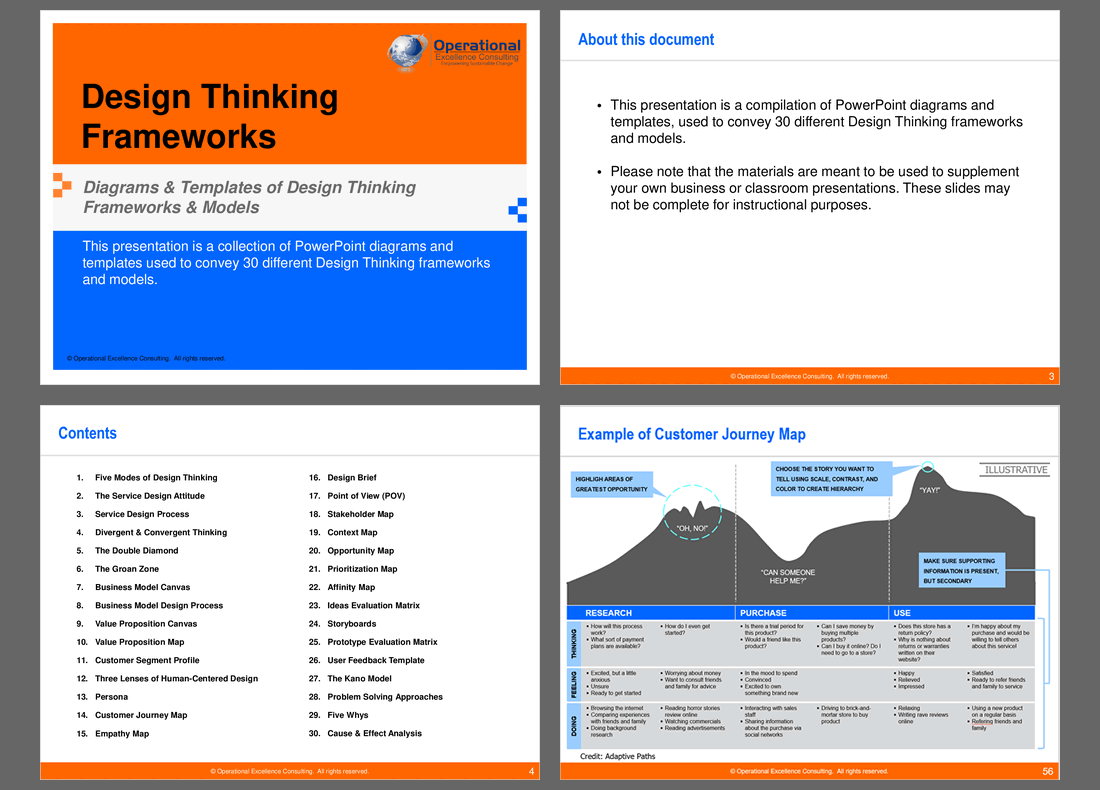

This presentation is a compilation of PowerPoint descriptions and diagrams used to convey 30 different Design Thinking frameworks and models. (Please note that the materials are meant to be used to supplement your own business or classroom presentations. These slides may not be complete for instructional purposes.)
INCLUDED FRAMEWORKS/MODELS:
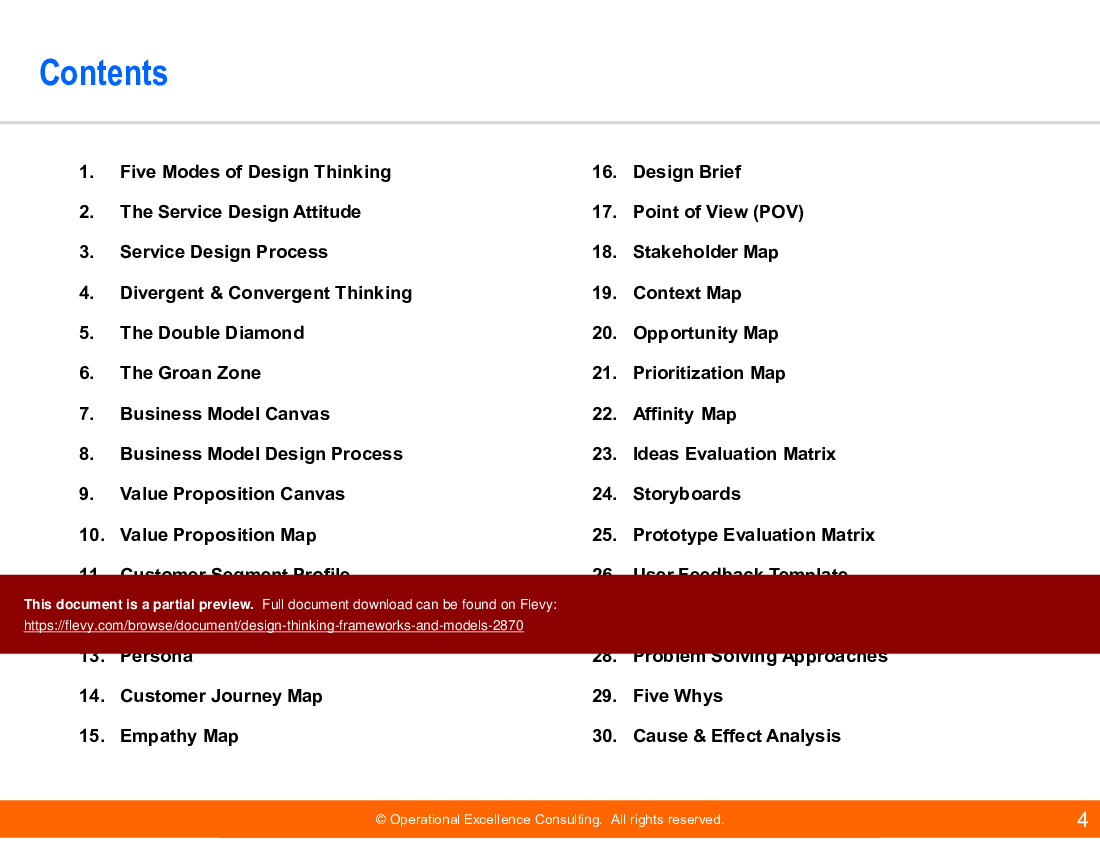
1. Five Modes of Design Thinking
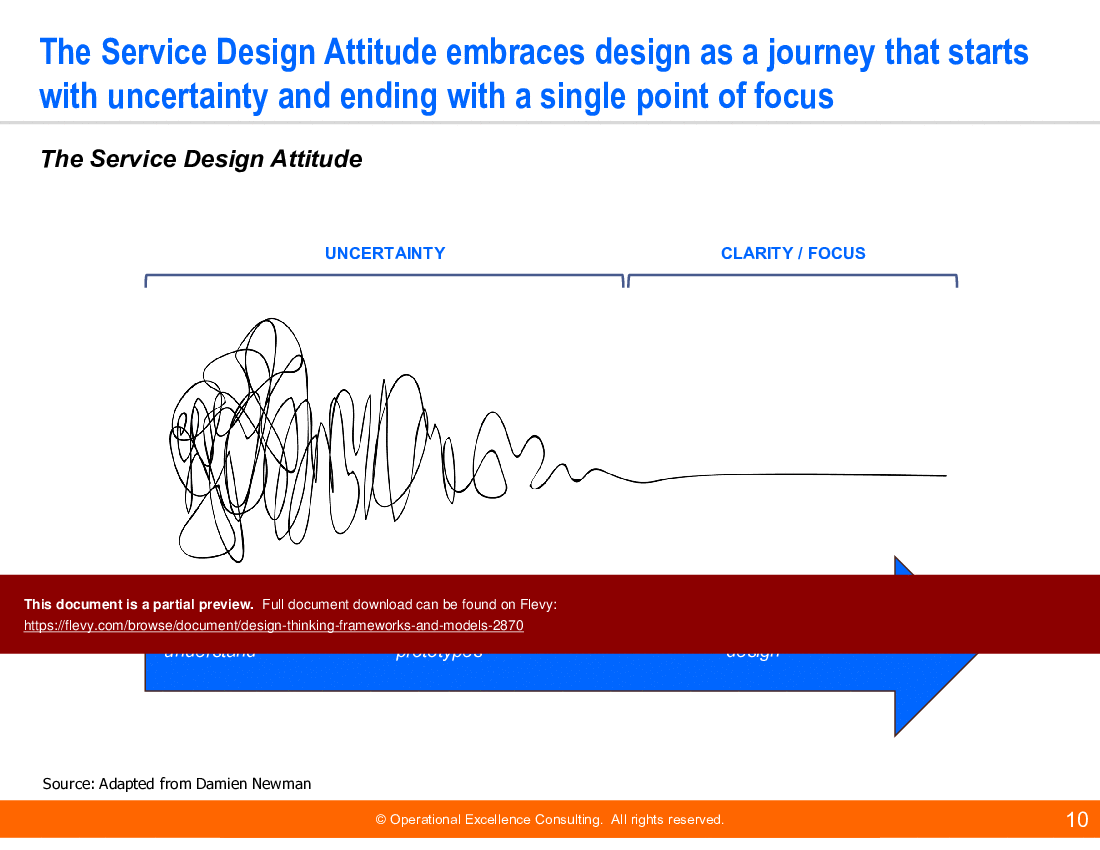
2. The Service Design Attitude
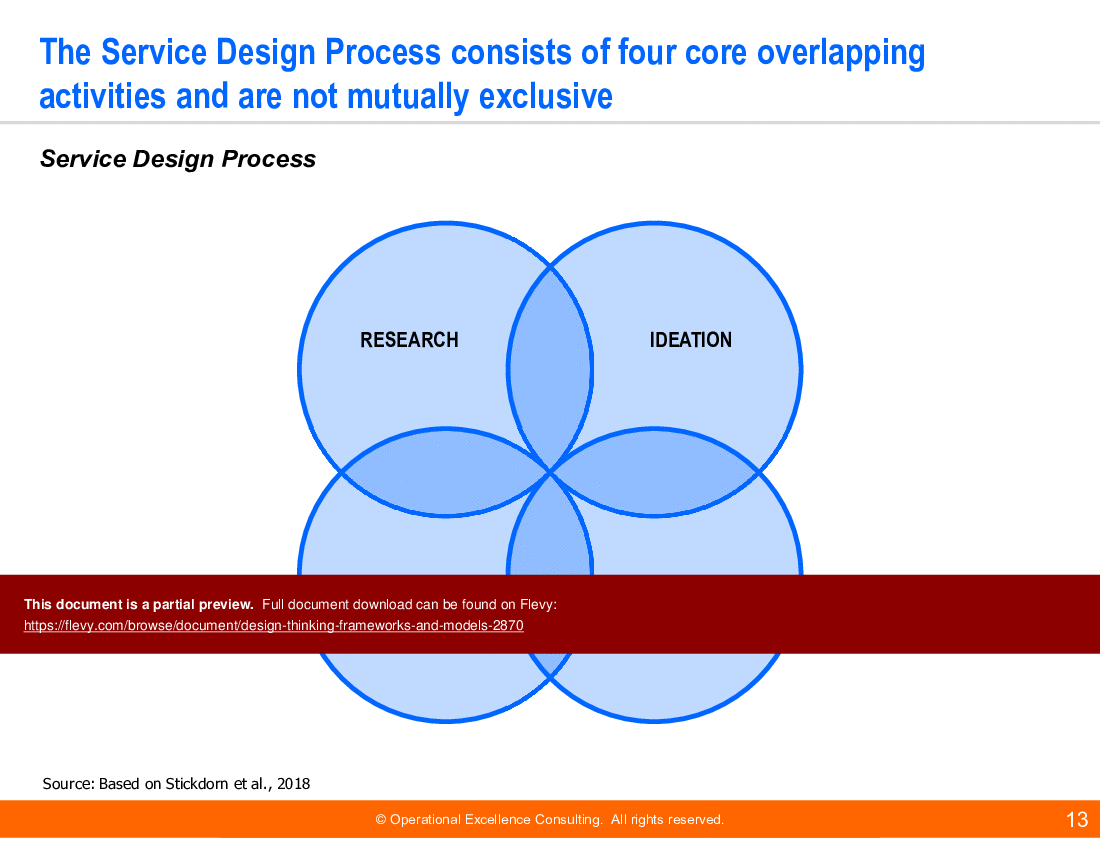
3. Service Design Process
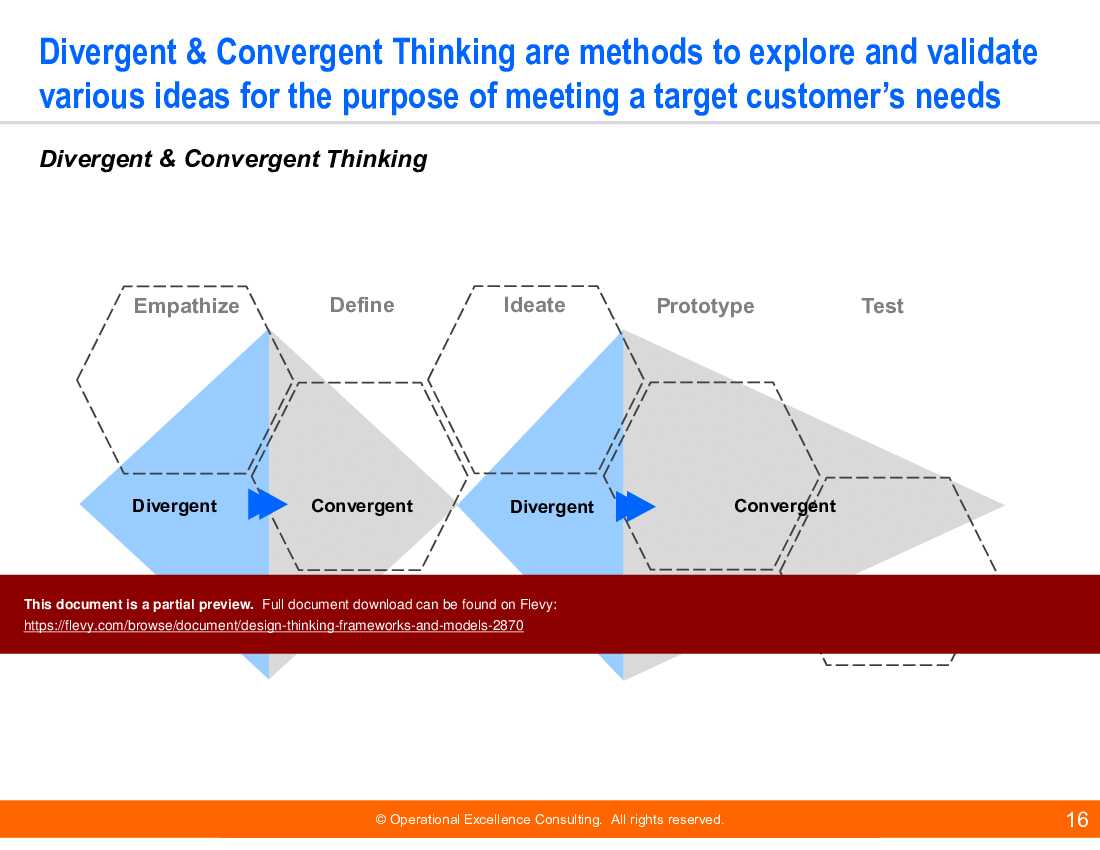
4. Divergent & Convergent Thinking
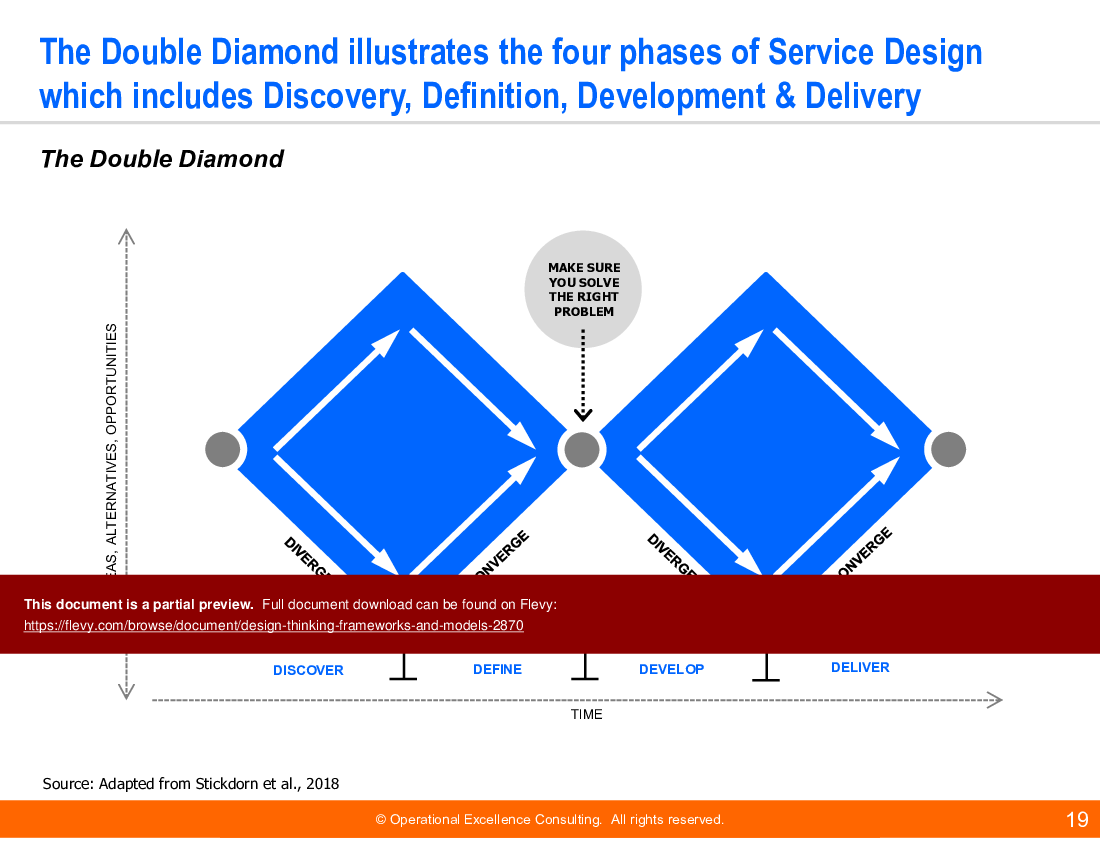
5. The Double Diamond
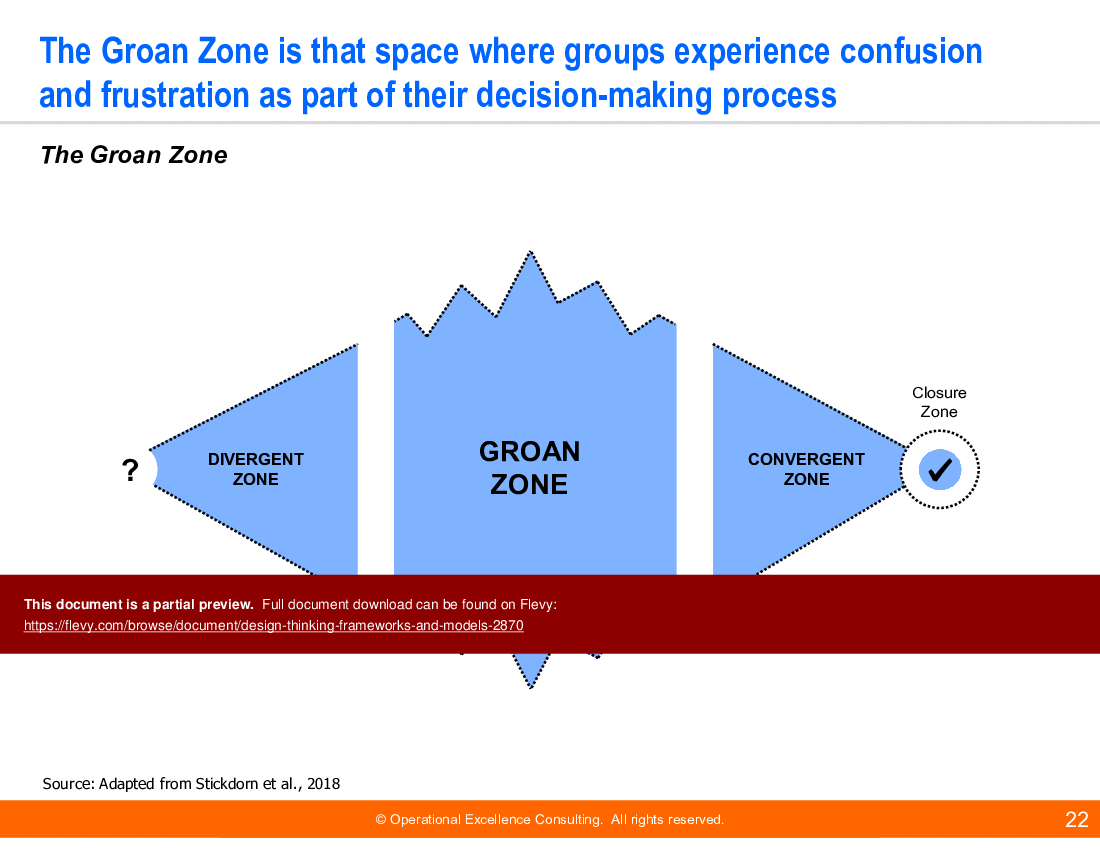
6. The Groan Zone
7. Business Model Canvas
8. Business Model Design Process
9. Value Proposition Canvas
10. Value Proposition Map
11. Customer Segment Profile
12. Three Lenses of Human-Centered Design
13. Persona
14. Customer Journey Map
15. Empathy Map
16. Design Brief
17. Point of View (POV)
18. Stakeholder Map
19. Context Map
20. Opportunity Map
21. Prioritization Map
22. Affinity Map
23. Ideas Evaluation Matrix
24. Storyboards
25. Prototype Evaluation Matrix
26. User Feedback Template
27. The Kano Model
28. Problem Solving Approaches (Left-brain & Right-brain)
29. Five Whys
30. Cause & Effect Analysis
This presentation includes frameworks and models covering: Stanford Design School's Five Modes of Design Thinking, Damien Newman's Design Squiggle, Stickdorn's Service Design Process, Divergent & Convergent Thinking, Design Council's Double Diamond, Kaner's Diamond Model of Participation, Strategyzer's Business Model Canvas, Strategyzer's Value Proposition Canvas, IDEO's Human Centered Design Model, Persona, Customer Journey Maps, Xplane's Empathy Map, Design Brief, Point of View Madlib, Stakeholder Map, Context Map, Opportunity Map, Prioritization Map, Affinity Map, Ideas Evaluation Matrix, Storyboards, User Feedback, Prototype Evaluation Matrix, The Kano Model, Problem Solving Approaches, Five Whys and the Cause & Effect Diagram.
This PPT goes beyond traditional frameworks by incorporating practical templates like the Business Model Canvas and Empathy Map, enabling you to apply these concepts directly to your projects. It includes detailed descriptions and visual aids for each model, ensuring you can communicate complex ideas with clarity. The inclusion of real-world examples, such as the Value Proposition Canvas for Tesla, provides actionable insights into how these frameworks can be utilized effectively. This presentation is designed to be a comprehensive toolkit for any executive looking to leverage design thinking to drive innovation and strategic growth.
Got a question about the product? Email us at support@flevy.com or ask the author directly by using the "Ask the Author a Question" form. If you cannot view the preview above this document description, go here to view the large preview instead.
Executive Summary
This presentation offers a comprehensive collection of PowerPoint diagrams and templates that illustrate 30 distinct Design Thinking frameworks and models. It serves as a practical resource for professionals aiming to implement Design Thinking methodologies in their organizations. By utilizing these frameworks, users can enhance their problem-solving capabilities, foster innovation, and streamline service design processes. The materials are designed to be customizable, allowing teams to adapt the content to their specific needs and contexts.
Who This Is For and When to Use
• Product Managers seeking to innovate and improve user experience
• UX/UI Designers aiming to apply Design Thinking principles in their projects
• Business Analysts focusing on customer needs and service design
• Project Managers leading teams in creative problem-solving initiatives
Best-fit moments to use this deck:
• During brainstorming sessions to generate innovative solutions
• In workshops focused on user-centered design methodologies
• For training sessions on implementing Design Thinking in organizations
• When developing or refining business models and value propositions
Learning Objectives
• Define the core principles of Design Thinking and its application in various contexts
• Build empathy for users through effective research and observation techniques
• Create actionable problem statements using the Point of View framework
• Develop and test prototypes to validate ideas and gather user feedback
• Utilize various mapping tools (e.g., Empathy Map, Customer Journey Map) to visualize user experiences
• Implement the Business Model Canvas to innovate and document business models
Table of Contents
• Five Modes of Design Thinking (page 6)
• The Service Design Attitude (page 10)
• Service Design Process (page 13)
• Divergent & Convergent Thinking (page 16)
• The Double Diamond (page 19)
• The Groan Zone (page 22)
• Business Model Canvas (page 25)
• Business Model Design Process (page 33)
• Value Proposition Canvas (page 36)
• Customer Segment Profile (page 44)
• Empathy Map (page 59)
• Design Brief (page 66)
Primary Topics Covered
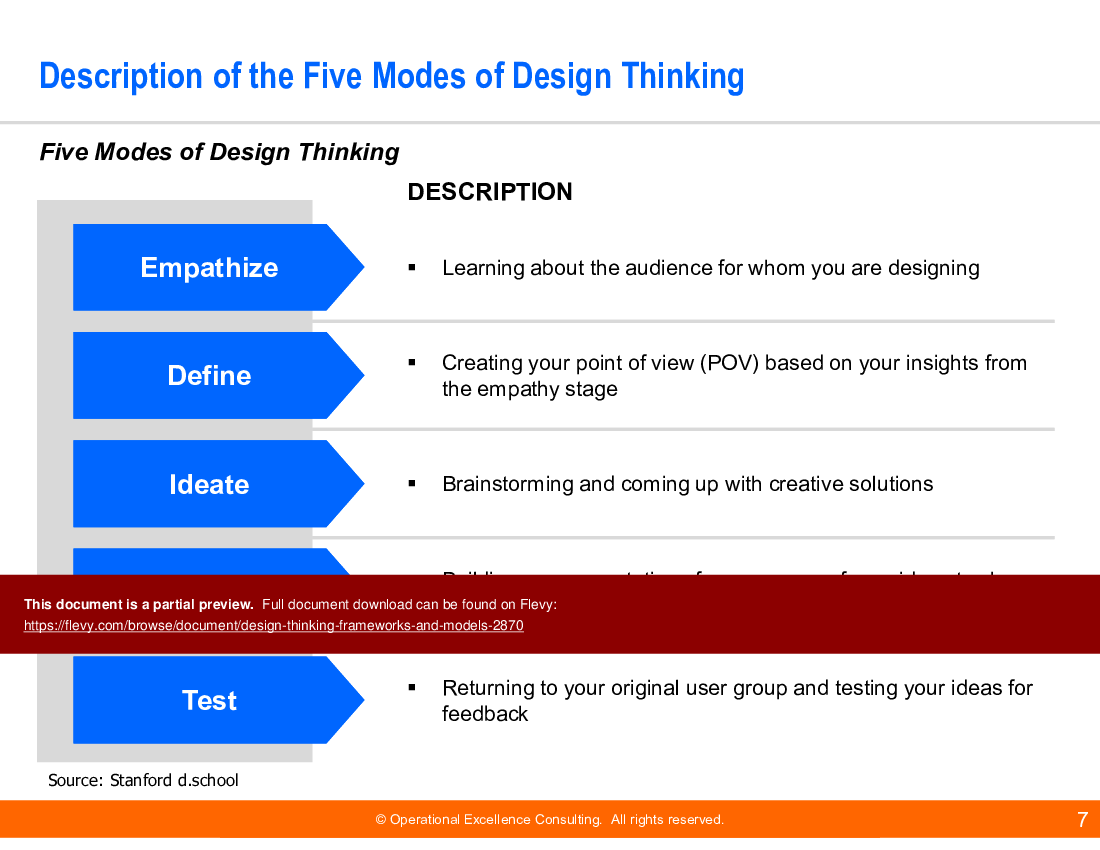
• Five Modes of Design Thinking - A structured approach to problem-solving that includes Empathize, Define, Ideate, Prototype, and Test phases.
• Service Design Process - An overview of the core activities involved in designing effective services, including Research, Ideation, Prototyping, and Implementation.
• Business Model Canvas - A visual framework for developing and documenting business models, focusing on key components such as Customer Segments and Value Propositions.
• Value Proposition Canvas - A tool to align products and services with customer needs, detailing Gains, Pains, and the Value Map.
• Customer Journey Map - A visualization of the customer experience, highlighting key touchpoints and emotional responses throughout the journey.
• Empathy Map - A framework for synthesizing observations about customer segments to uncover insights and drive design decisions.
Deliverables, Templates, and Tools
• Five Modes of Design Thinking template
• Service Design Process diagram
• Business Model Canvas template
• Value Proposition Canvas template
• Customer Journey Map template
• Empathy Map template
Slide Highlights
• Visual representation of the Five Modes of Design Thinking, illustrating the iterative nature of the process.
• The Double Diamond framework, showcasing the phases of Discovery, Definition, Development, and Delivery.
• The Business Model Canvas with detailed descriptions of each building block.
• Examples of the Value Proposition Canvas applied to real-world scenarios, such as Tesla.
• Templates for the Empathy Map and Customer Journey Map to facilitate user-centered design.
Potential Workshop Agenda
Introduction to Design Thinking (30 minutes)
• Overview of Design Thinking principles and methodologies
• Discussion on the importance of user empathy
Hands-On Session: Empathy Mapping (60 minutes)
• Participants create Empathy Maps for their target users
• Group sharing and feedback on insights gathered
Prototyping Workshop (90 minutes)
• Teams develop low-fidelity prototypes based on their ideas
• Presentations and feedback sessions to refine concepts
Business Model Innovation (60 minutes)
• Utilize the Business Model Canvas to brainstorm new business models
• Group discussions on aligning value propositions with customer needs
Customization Guidance
• Modify templates to reflect specific organizational branding and terminology.
• Tailor the content to address unique customer segments relevant to your business context.
• Adjust the frameworks to align with specific project goals and timelines.
Secondary Topics Covered
• The Groan Zone and its implications in the decision-making process
• Divergent and convergent thinking methods for idea generation
• The Kano Model for understanding customer satisfaction
• Problem-solving approaches that integrate analytical and creative thinkingDocument FAQ
These are questions addressed within this presentation.
What is Design Thinking?
Design Thinking is a human-centered approach to innovation that emphasizes understanding user needs and iterating solutions through prototyping and testing.
How can I customize the templates?
Templates can be modified to include your organization's branding, specific terminology, and tailored content to fit your project requirements.
What are the Five Modes of Design Thinking?
The Five Modes are Empathize, Define, Ideate, Prototype, and Test, representing the stages of the Design Thinking process.
How do I use the Business Model Canvas?
The Business Model Canvas helps visualize and document the key components of a business model, including customer segments, value propositions, and revenue streams.
What is the purpose of the Empathy Map?
The Empathy Map is used to synthesize observations about customers, helping teams understand their needs, feelings, and behaviors.
Can these frameworks be used in any industry?
Yes, the frameworks are adaptable and can be applied across various industries to enhance innovation and service design.
What is the significance of the Double Diamond framework?
The Double Diamond framework illustrates the phases of the design process, emphasizing the importance of exploring and defining problems before developing solutions.
How can I implement these frameworks in my organization?
Begin by conducting workshops to introduce the frameworks, then integrate them into your project planning and execution processes.
Glossary
• Design Thinking - A methodology for creative problem-solving focused on user needs.
• Empathy Map - A tool for understanding customer perspectives and experiences.
• Business Model Canvas - A visual framework for developing and documenting business models.
• Value Proposition Canvas - A tool to align products with customer needs.
• Customer Journey Map - A visualization of the customer experience across touchpoints.
• Prototyping - The process of creating a preliminary model of a product or service for testing and feedback.
• Double Diamond - A framework illustrating the phases of design: Discover, Define, Develop, and Deliver.
• Kano Model - A framework for categorizing customer preferences and their impact on satisfaction.

• Divergent Thinking - A method for generating multiple ideas and solutions.
• Convergent Thinking - A method for narrowing down ideas to find the best solution.
• Service Design - The process of designing services to improve user experience and satisfaction.
• Stakeholder Map - A tool for identifying and documenting key stakeholders in a project.
• Context Map - A diagram representing factors affecting the design of a product or service.
• Opportunity Map - A tool for identifying areas of opportunity in the market.
• Prioritization Map - A method for evaluating ideas based on their feasibility and impact.
• Affinity Map - A technique for organizing ideas based on relationships and affinities.
• Ideas Evaluation Matrix - A tool for assessing and prioritizing ideas based on various criteria.
• Storyboard - A graphic organizer for visualizing sequences of events or ideas.
• User Feedback Template - A tool for documenting user experiences and feedback on products or services.
• Prototype Evaluation Matrix - A framework for assessing the effectiveness of prototypes based on specific criteria.
• Five Whys - A technique for identifying the root cause of a problem by asking "why" repeatedly.
• Cause & Effect Analysis - A method for understanding the root causes of issues in processes or systems.
Source: Best Practices in Business Framework PowerPoint Diagrams, Service Design PowerPoint Slides: Design Thinking Frameworks & Models PowerPoint (PPTX) Presentation Slide Deck, Operational Excellence Consulting
This document is available as part of the following discounted bundle(s):
Save %!
Design Thinking Consultant Toolkit
This bundle contains 3 total documents. See all the documents to the right.
|
Receive our FREE Primer on Lean Management
This 32-page presentation from Operational Excellence Consulting explains the Lean Management philosophy, based on the Toyota Production System (TPS). Learn to eliminate waste. |